
July 1, 2025 · By Krystian Flores
Schema Markup That Speaks Higher Ed Fluently

MetaSculpt AI: Schema Markup That Speaks Higher Ed Fluently
Higher education websites are rich with valuable content; academic programs, faculty directories, campus events, research outputs, and more. But search engines don’t naturally understand what those pages mean. That’s where MetaSculpt AI comes in.
It automates schema markup across your institution’s site using structured data that’s purpose-built for higher ed. Powered by Gemini and a comprehensive university schema context cache, MetaSculpt helps your content stand out in search, stay accurate, complete, and compliant at scale.
Smarter SEO, No Code Required
MetaSculpt is designed to support the complexities of college and university websites: multiple departments, varied content types, decentralized editing, and evolving program structures.
Part of the sign up process involves uploading a sitemap. Once your site is created you should see a list of all your pages.
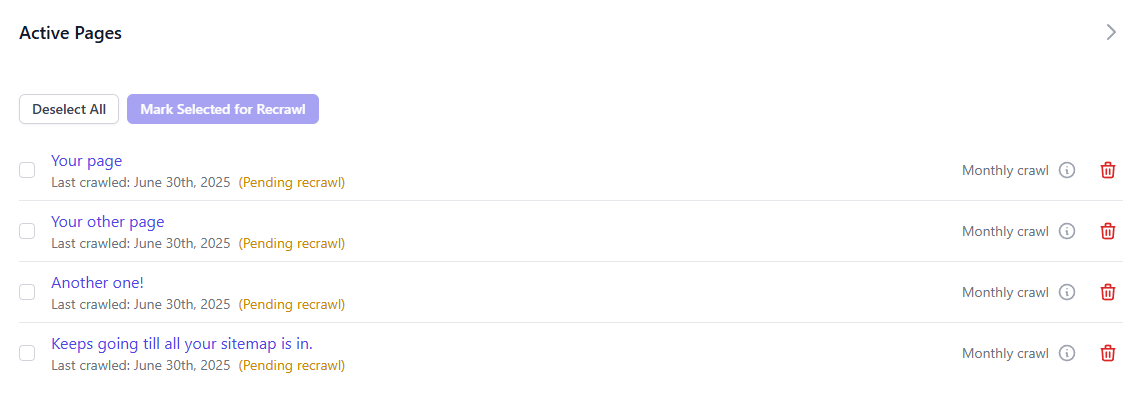
Sitemap a bit out of date? You can update it with one of the tools linked to in our resource page or simply add the missing page in your site manager.

Now all that's left to do is placing the snippet, which is easy to do:
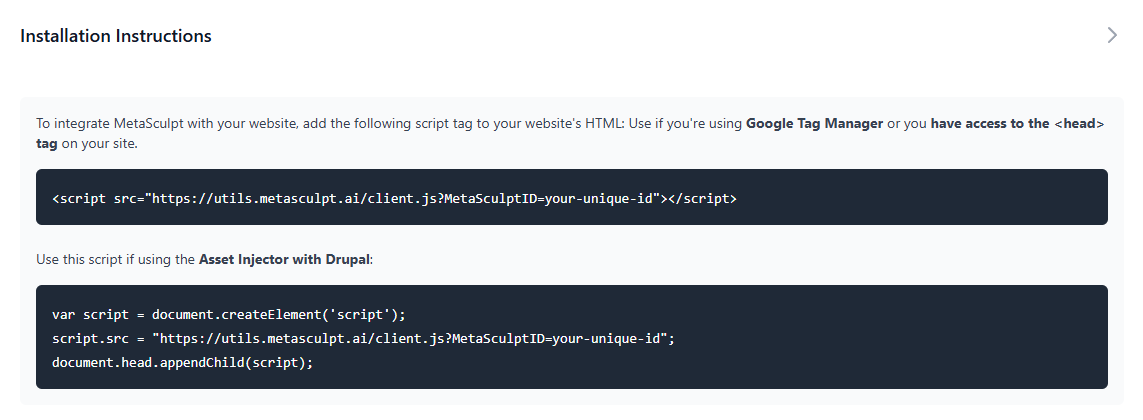
Built your site differently? No worries, we’ve got you covered too!
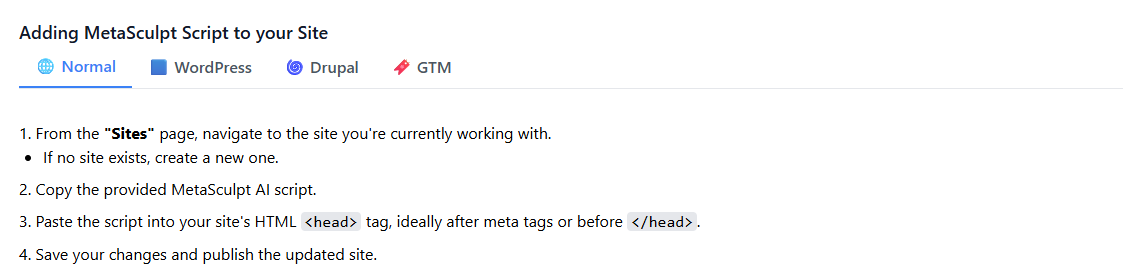
Once the snippet is placed, it:
- Detects and classifies pages like EducationalOccupationalProgram, CollegeOrUniversity, Course, Event, and WebPage
- Automatically applies the correct structured data using schema.org standards
- Maintains and updates markup over time, without needing you to lift a finger
You don’t need plugins. You don’t need dev cycles. Just paste one snippet and go live.
Try it free and experience the lift of real, AI-powered structured data coverage.
Built with Gemini + a Rich Schema Context Cache
MetaSculpt runs on Gemini, which gives it both speed and nuanced understanding of your website's structure. But the real power comes from its explicit context cache; a structured mapping of higher education schema types and their properties.
This cache includes semantic relationships for content types like:
- EducationalOccupationalProgram (program prerequisites, start dates, credentials awarded)
- CollegeOrUniversity (location, contact points, department structure)
- Event (start/end dates, location, audience)
- CreativeWork (authorship, publication, learning resource type)
- WebPage and WebSite (main entity, schema versioning, access modes)
These aren’t guessed; they’re aligned to the actual patterns seen across institutional websites. This means smarter tagging, better validation, and results that reflect your site's academic intent.
Want to expand the cache? You can update your institutional schema blueprint and MetaSculpt will adapt automatically.
Set It Up in Minutes
You don’t need a technical team to deploy MetaSculpt. Here's how simple it is:
- Create your account
- Add your domain
- Paste one JavaScript snippet into your site’s global header
- MetaSculpt begins crawling and tagging content automatically
- The dashboard shows structured data coverage, page-by-page
No templates. No rule-building. No micromanaging markup.
What You’ll See
Once the MetaSculpt AI snippet is live! your site begins communicating more clearly to search engines. The result:
- Rich snippets in Google Search (like degree details, faculty bios, event times)
- Higher rankings for key academic content
- Consistent structured data that evolves as your site grows
- Improved accessibility and machine-readability for AI-powered search
More visibility. Less effort. And structured data that’s always up to date.
Get Started Today
Your institution already produces world-class academic content. MetaSculpt ensures that content is recognized and rewarded in search.
With full coverage across educational schema types, AI automation at the core, and a seamless integration process, it’s the structured data platform built for the demands of higher education websites.
Try MetaSculpt free, and let your content do the talking.
Author: Krystian Flores
Published: July 1, 2025